A. Rimbaud
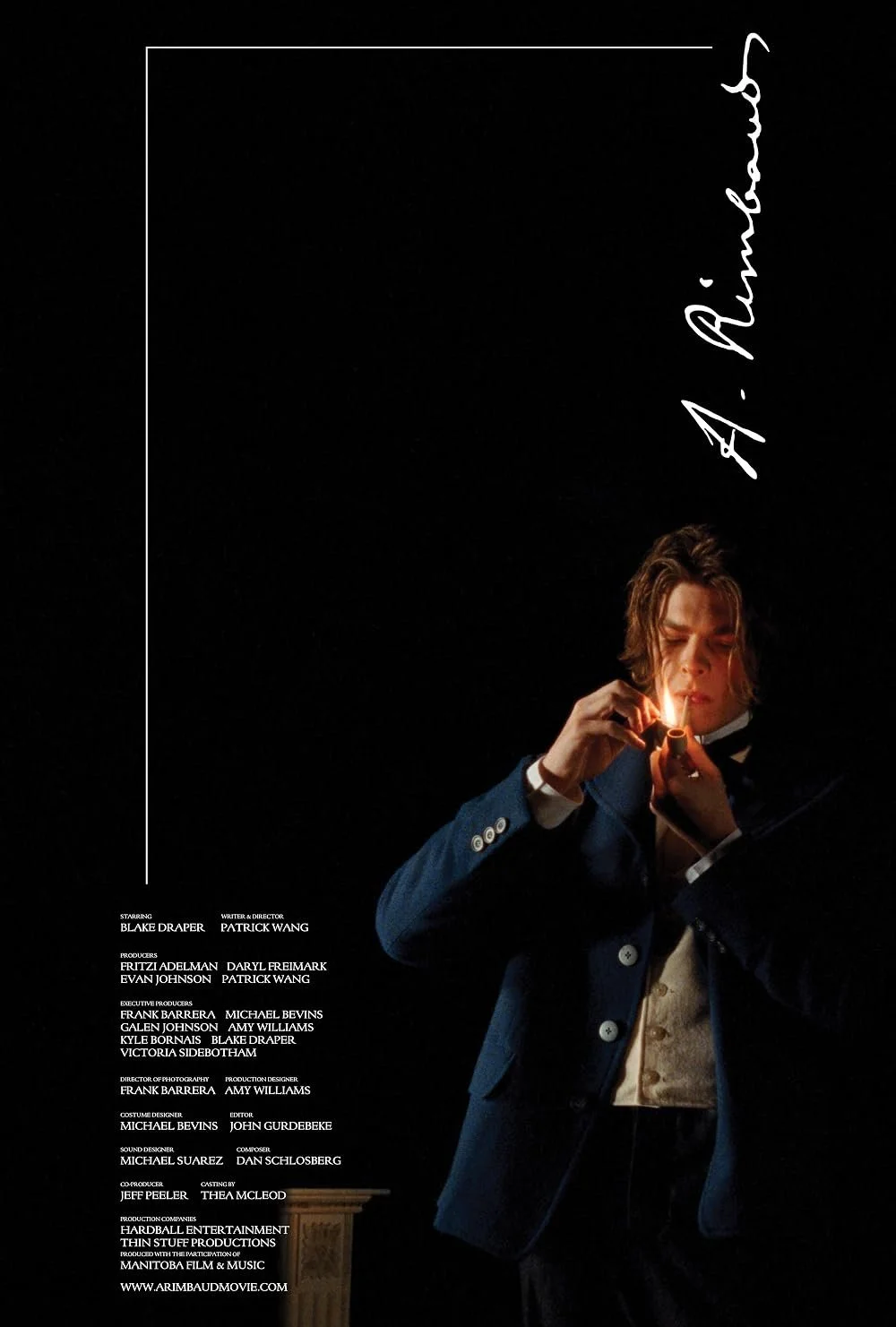
Patrick Wang’s A Bread Factory remains, ten years on, my preference for the best film of the 2010s and one of the best of the 2000s so far. Intricate, layered, full of constant surprise and humanity it was a filmed play (and that is not at all a pejorative the way it can be) taking the best of classic stage drama as the core of his filmmaking. A. Rimbaud, Wang’s first film in almost decade, does very much the same thing while being in almost all ways a completely different experience. A one-man play, shorn of mis en scene, ensemble or anything else to distract from its character or narrative, it nonetheless holds the attention across the entirety of a man’s life. Thrilling, engaging, difficult, and requiring much of its viewer, A. Rimbaud unique and challenging choices are a prime example of what makes Wang’s filmmaking so interesting and intricate to begin with.
Picking up with Rimbaud as a young man embarking on his first foray’s into poetry, A. Rimbaud follows his youthful daliances and thoughts before discarding them in favor of a working life as a merchant in Cyprus. Ignoring the siren call of Rimbaud’s artistic endeavors – the elements making him a target for a biopic at all – Wang instead chooses to focus on the man, what he thought about the world around him at different points in his life and through that why he choose to leave art behind and become a middle class striver, something his peers could never understand about him. It’s not clear Wang does either, we’re all still external to Rimbaud’s internal life even within the film itself, but it’s the most direct examination of it ever. Just as Rimbaud does, Wang quickly and directly leaves his poetry behind to keep his eyes in direct focus on the poet.
By giving up nearly all of the external trappings of film, Wang is able to focus more definitively and concretely on Rimbaud’s life: what he thought about his circumstances, how he reacted to them, and, more importantly, how those circumstances changed him over time, revealing the complexities of a human life. We don’t really see his youth or earliest days. The film begins with his internal initiation as a young man into a self of his own, and then follows that self as it grows and changes in response to the world around him, and very specifically how his tempestuous relationships with his closest friends and family change and reveal him until he is occupying a mind and a history as far from poetry as one might imagine it possible to be. One can imagine the young Rimbaud at the beginning of the film looking ahead to where he eventually ends up with nothing but derision and distaste, in a way that suggests his artistic impulses almost had nothing to do with him, even though they were purely a product of his life at that time.
In the process, Wang delves more deeply into Rimbaud the poet than most biopics of this type, showing us the real person behind the creation, in all of his facets, and, in doing so, giving us a new understanding of how someone created what they did and, in many ways, how completely removed a work of art can be from its creator. Notably it is always through conversation, albeit conversations we can only ever hear one side of, making the film almost epistolary in nature. Letters from the past delivered over time, they become like a documentary of solo evolution in time lapse. It goes without saying that none of this would work without the strength of Blake Draper’s performance. He has to hold the screen, and our attention, for the entire three hours by himself, with almost nothing else to hold on to, not even a set to hide behind. With growing confidence and verve, he gradually takes over more and more of the screen until you forget that he is the sole presence here. It is a dynamic tightrope act between writer-director Wang and actor Draper, one that either of them could lose their balance and fall from at any point, but neither does.
Perhaps the first real attempt, in text or film, to try and answer the questions about why Rimbaud made the life choices he did, and what that has to say about the art he created, A. Rimbaud requires a very real amount of effort and work from its audience, but it’s work that will be rewarded. Patrick Wang’s previous film was easily one of the best of the decade in which it came out. It is entirely possible that we may be able to say the same for A. Rimbaud may say the same for the 2020s.
8.5 out of 10
Starring Blake Draper. Directed by Patrick Wang.