Disclosure Day
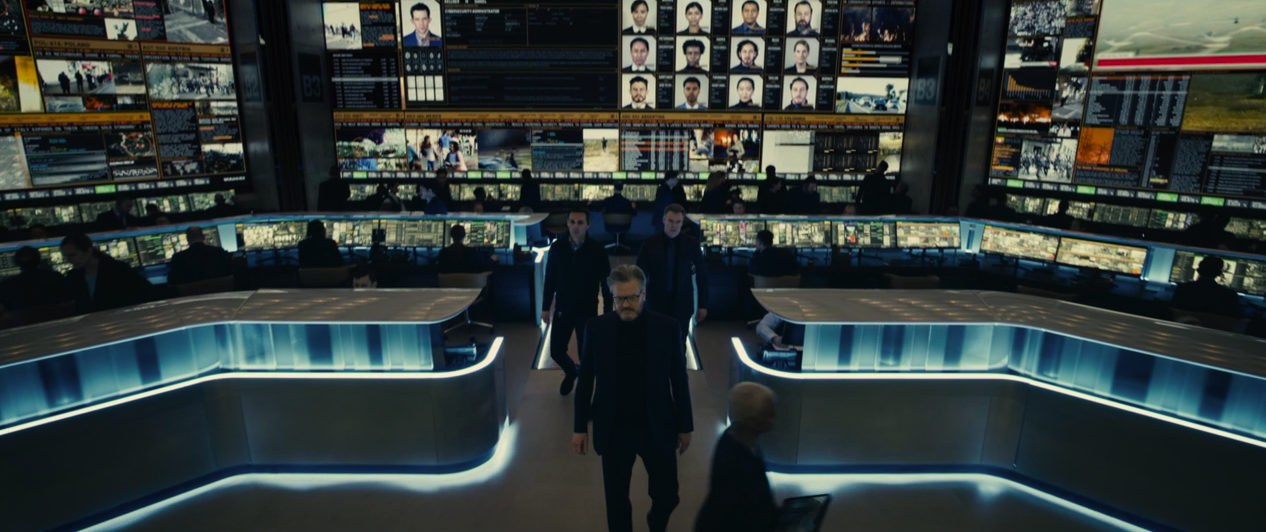
Steven Spielberg’s Disclosure Day is one of his most frustrating offerings, visually inventive but also reductive and regressive. Working with many of his favorite collaborators from 50 years of filmmaking—including writer David Koepp, composer John Williams, and cinematographer Janusz Kaminski—has produced a film very much like many of the ones he has made over that time span. Stylistically immaculate, crafted at the highest level, and filled with recognizable flourishes, Disclosure Day offers little in the way of new visual or thematic discovery. Its imagery recalls War of the Worlds and Minority Report, and frequently, deliberately, reaches further back toward the awe-struck vocabulary of Close Encounters of the Third Kind, revealing similar thematic thinking that was fresh and interesting in the 1970s but has not evolved in any real way since then. The result is a film that looks effortlessly accomplished, but also strangely recycled.

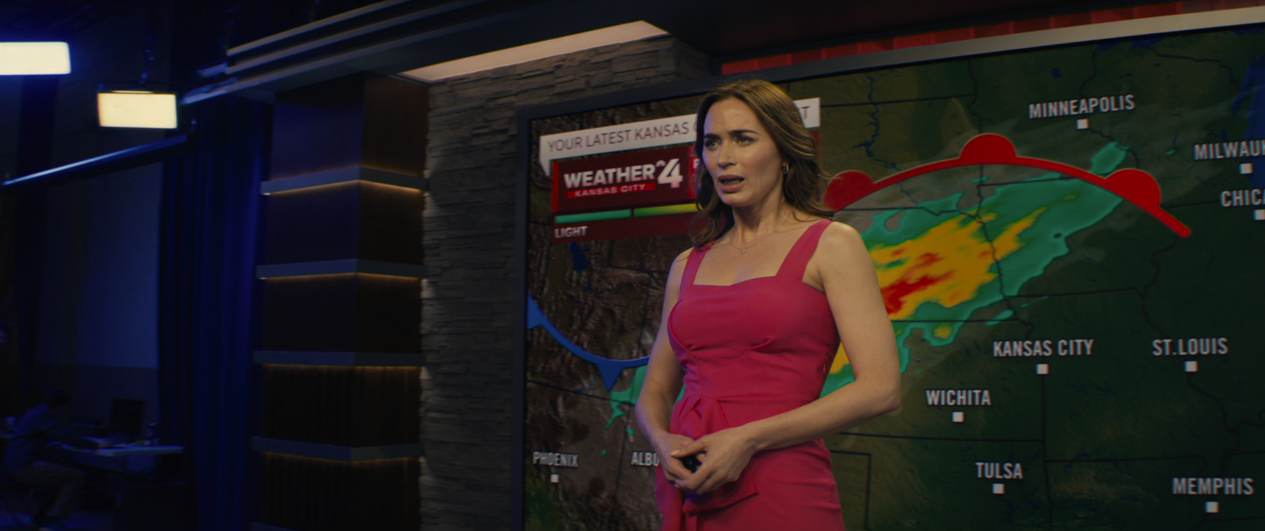
At its core is Dr. Daniel Kellner (O’Connor), a mathematician on the run from a shadow organization led by a shadowy man (Firth), with a backpack filled with video proof of the existence of extraterrestrials on Earth stretching back decades—knowledge that could upend Earth’s beliefs about itself the way Copernican observation did to the Church. And like Copernicus, Kellner is persecuted for it, hounded through middle America as he tries to bring his proof to a former insider (Domingo) intent on releasing the information to the world. His secret weapon, whether he realizes it or not, is Missouri weatherwoman Margaret Fairchild (Blunt), after she spontaneously develops the ability to understand everyone and everything, reading minds and seeing over great distances to view the world as it really is, including its alien visitors.
It’s a recipe for exquisite strangeness and some genuinely taut tension, especially when Scanlon uses the alien technology at his disposal to take over the mind of Kellner’s ex-nun girlfriend (Hewson) to ferret out his location. It’s also a premise that might have felt urgent in the X-Files-shaped atmosphere of the 1990s, but in the 2020s it lands awkwardly, out of step with a political culture whose conspiratorial imagination has shifted into darker, more paranoid, and more political territory. Some of this may be intentional, or at least in keeping with the spirit of Disclosure Day’s themes; it clearly wants to ask large questions, not only about where we came from and where we are going, but about our relationship to belief itself. More specifically, it is interested in modern Christian belief and how faith changes when confronted with radical new information from outside the known world. Copernicus rears his head again.
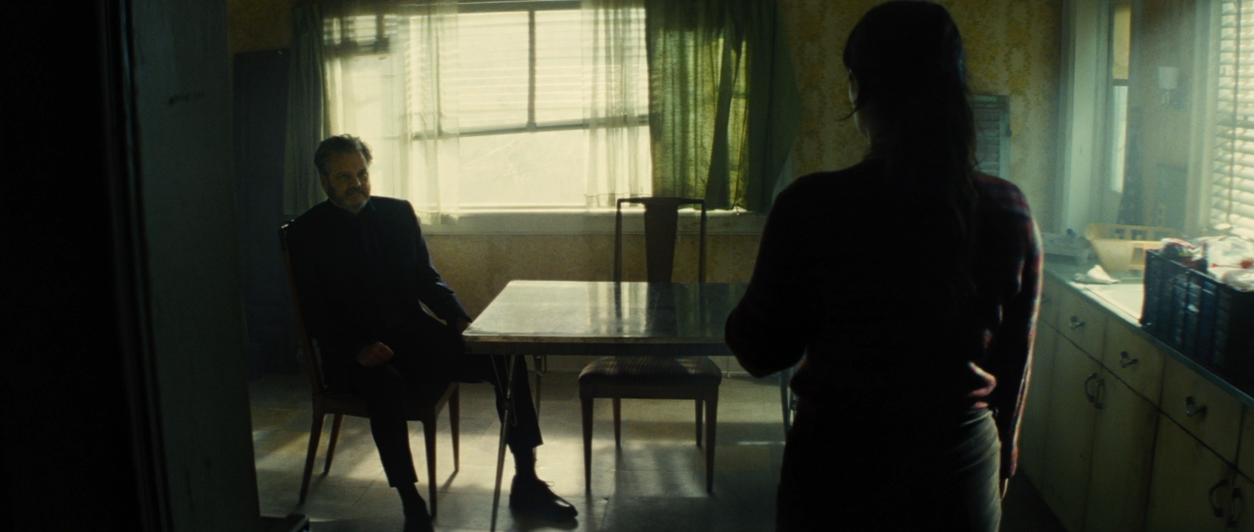
The trouble is that David Koepp’s script approaches these ideas in the most surface-level and prosaic way possible. Casting Jane as a former novitiate offers the kind of lazy backdoor to stage direct, explicit conversations about belief that a better movie would be cagier about, as if the audience may not understand otherwise. That loss is especially frustrating because the movie repeatedly gestures toward richer conflicts. The apparent beginnings of World War III with North Korea, for instance, form a counter textual crisis to the hidden one involving the aliens. The two should converge, with one revealing or transforming the other. Instead, the geopolitical crisis is kept so firmly in the background to keep focus on Kellner and Fairchild and their bloodless chase that it may as well not exist at all.
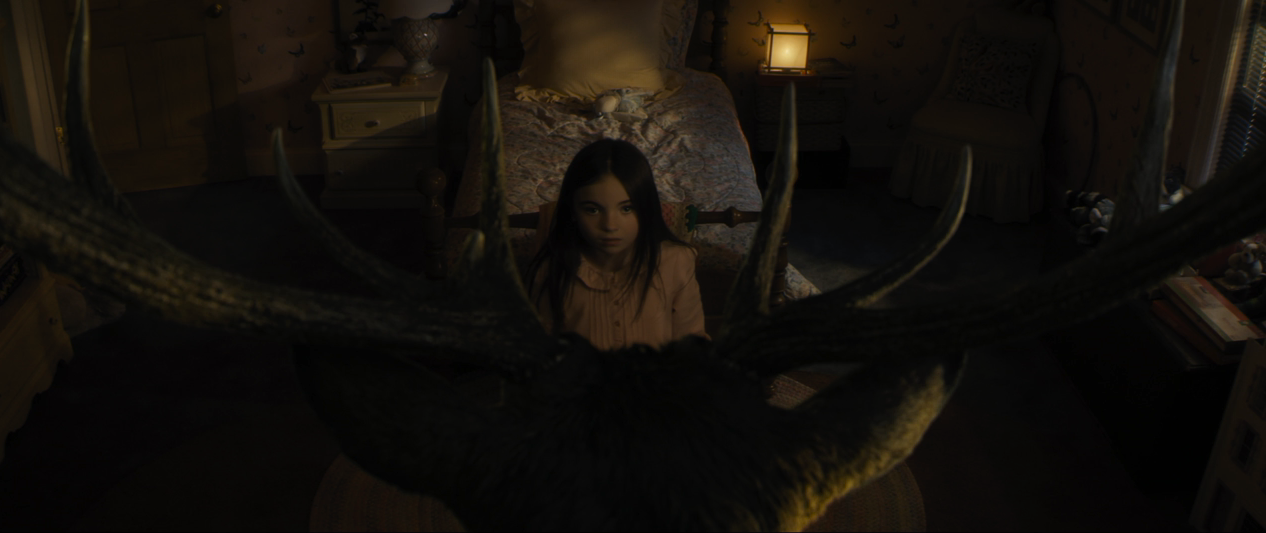
The same is true of the film’s most intriguing human conflict, which is not its heroes at all—they are, in fact, a little bland—but its shadowy puppet masters, Firth and Domingo. Disclosure Day offers repeated hints and provocations about their long, complicated history, a history that seems to speak directly to the film’s larger ideas, but which is pushed away in order to focus on keeping the plot moving.

Blunt is fantastic as Fairchild, a television weatherwoman blessed with one of the film’s great character names. She is the perfect communicator: a woman intuitively linked to the strange events unfolding around her. It’s a role that could easily be turned into a plot device, but, like Samantha Morton’s work in Minority Report, Blunt transforms her clear plot contrivances into emotional trauma and wonderment. She becomes the beating heart of the film. O’Connor is a more prosaic Spielberg hero, there largely to carry the physical demands of the adventure sequences. He is effective in that role, but he and Blunt, by design, spend much of the film running from forces they barely understand, toward a destination they can hardly define.

Still, Spielberg’s command of action remains formidable, particularly in a beautifully constructed train set piece in which O’Connor and Blunt’s car is nearly forced into the path of an oncoming train, requiring them to escape onto the train itself before being crushed. For all the passing years, Spielberg has lost none of his visual splendor, nor his ability to build tension and deliver a clean, propulsive set piece.
That mastery only makes the film’s limitations more glaring. Almost everything in Disclosure Day feels old-fashioned and out of date, right down to the clownish antics of the supposedly deadly soldiers tasked with capturing the heroes and preventing them from releasing their information to the world. Spielberg’s craft remains impeccable, but the film’s ideas feel timid, familiar, and oddly insulated from the moment it is trying to address. For all its ominous proclamations, and truly intriguing build early on, there’s just not much to see here.
5.5 out of 10
Starring Emily Blunt, Josh O’Connor, Colin Firth, Eve Hewson, Colman Domingo, Wyatt Russell and Henry Lloyd-Hughes. Directed by Steven Spielberg