The Odyssey
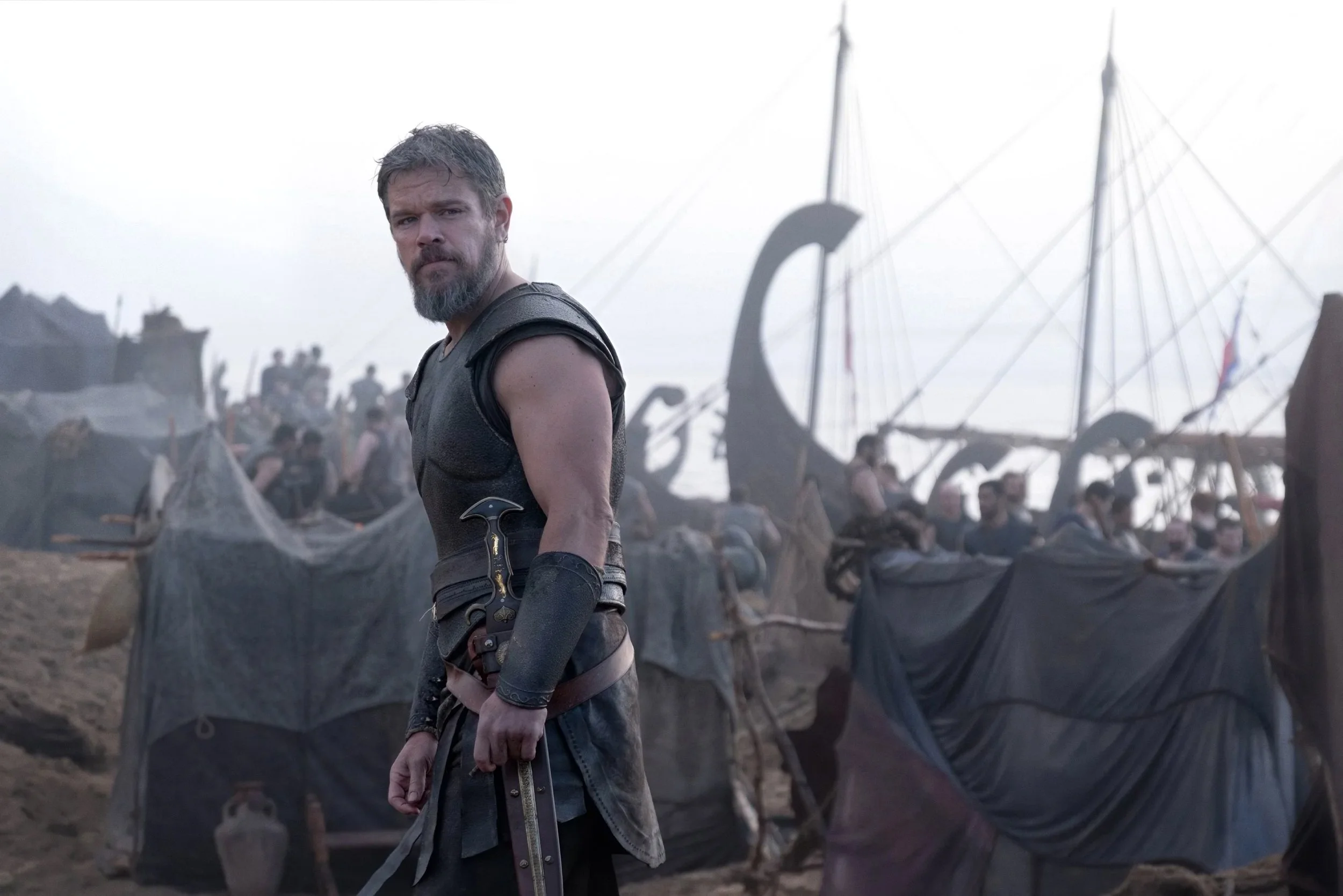
There are two types of films that it is easy to write about: the very good and the very bad. Christopher Nolan’s adaptation of The Odyssey is both easy and difficult to write about. Easy, because the film has a clear and deliberate argument about Homer’s epic and its meaning in the modern world, and difficult because of that argument. Rather than simply recreate the well-known episodes of Odysseus’ journey, Nolan choses to engage with them at their core, challenging the story’s assumptions, and asking what it means to a contemporary audience. It is a complete recontextualization of one of Western literature’s foundational works and one that can only be described as modern.
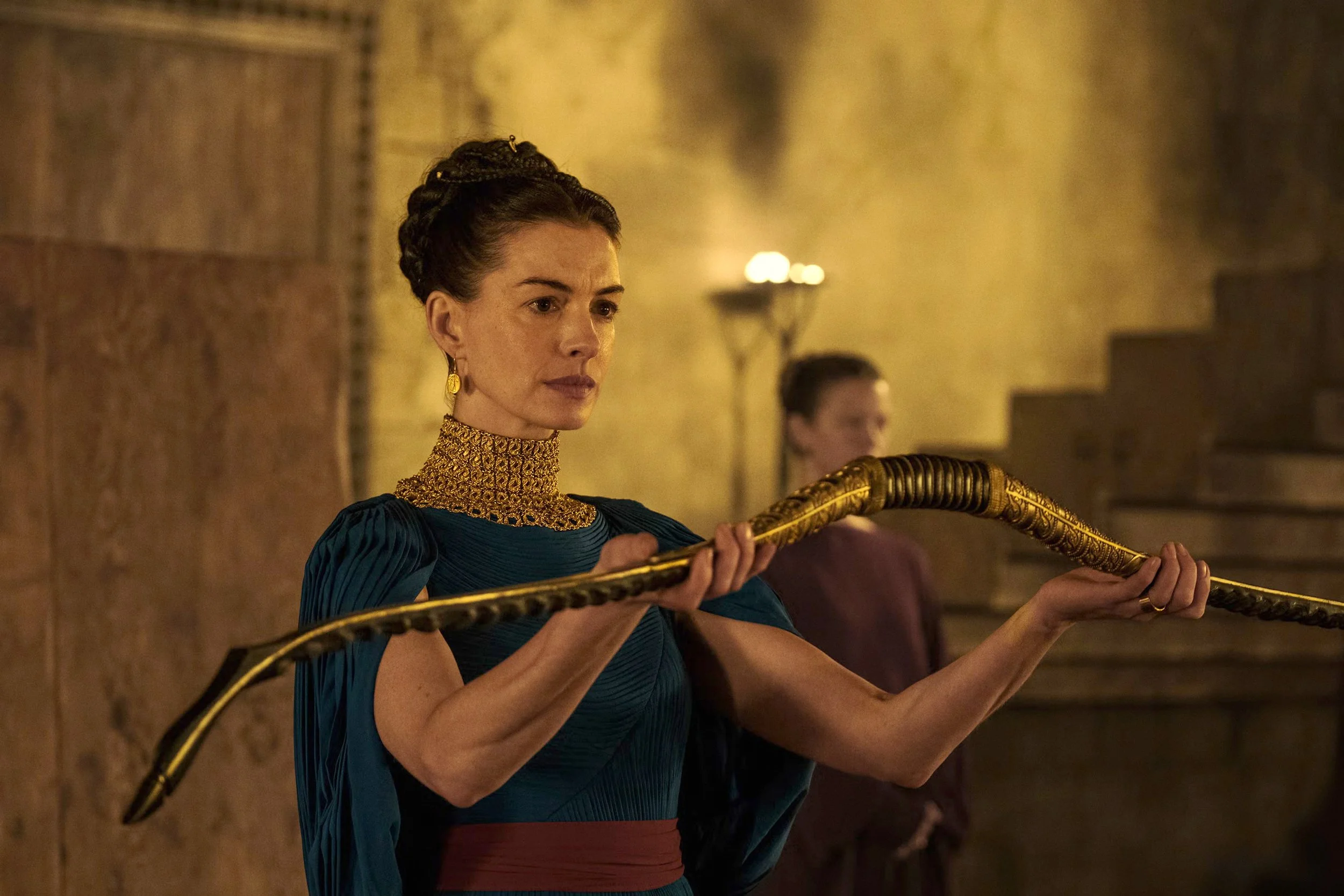
In the classical telling of The Odyssey, Odysseus is the exemplar of a heroic character. A warrior tested by forces beyond his control, placed before him by gods, enemies, and fate starting with the great walls of Troy themselves. After breaking them down with is legendary strategy Odysseus is bedeviled at every step on his voyage home by monsters, witches and the seas themselves. Each, from a giant Cyclops to a cliff dwelling monster and the call of the Sirens, he is able to best but still is waylaid twenty years trying to return home only to find his ancestral land overrun with greedy suitors attempting to steal his wife (Hathaway) and kill his son (Holland). By confronting each, like Hercules at his labors, he reaffirms himself a hero.
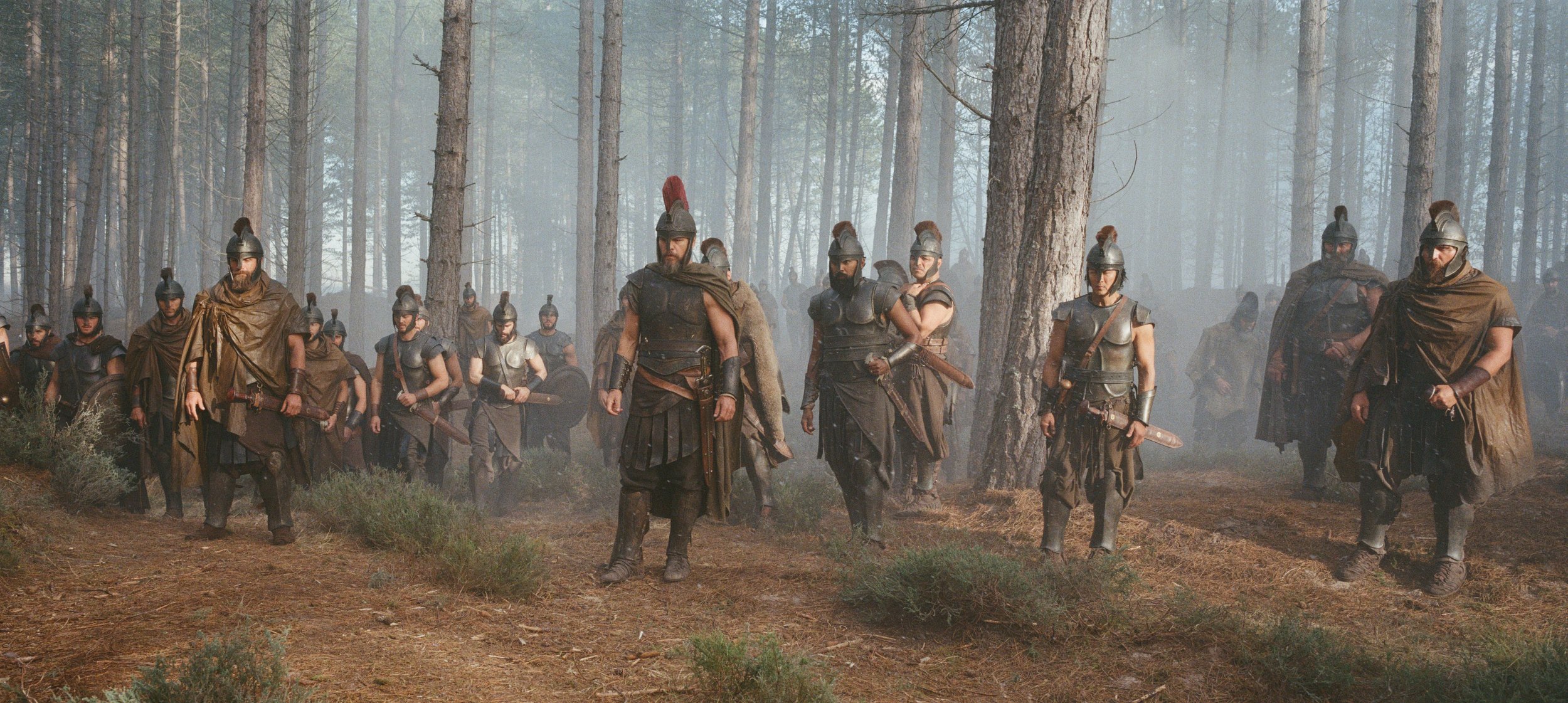
Or at least, he used to. Nolan’s interpretation turns that idea inside out. Rather than seeing Odysseus’s trials as proof of his heroism, the film presents them as the consequences of his actions. His journey is not simply a punishment imposed by the gods, but a confrontation with his own role in the violence and destruction that shaped his life. Nolan’s Odyssey suggests that the heroic stories civilizations tell about themselves often preserve the victories while erasing the cost. Odysseus has spent years carrying a legend of his own greatness, one which old comrades like King Menelaus (Bernthal) still speak about at feasts years after, but the journey home forces him to confront what that legend leaves out. The man who entered Troy through deception and violence must eventually reckon with a world where mercy and human connection matter more than conquest.
There is also the hint that Nolan himself, for all his work in the superhero space, has issues with handling mythology (not lore but the underpinnings of the fantastic). His filmmaking language has often been built around physical systems and frequently find drama in mechanisms, the interaction of structures and carefully designed environments. Witness the exact neatness of the world folding on itself in Inception or moving backwards in Tenet. Odysseus’s world, by contrast, is far more elemental; one not of machines but oceans, islands, deserts and vast empty horizons. Although defiantly contrasting Odysseus and his loneliness against it, it also suggests his unease with the truly mythical and preference to show literal nothingness over the fantastic. The supernatural elements of The Odyssey are often treated less as concrete realities and more as experiences filtered through memory, storytelling, and perception. Nolan keeps the magical, like the cyclops Polyphemus or the spells of the witch Circe, distant, obscured, or partially hidden.
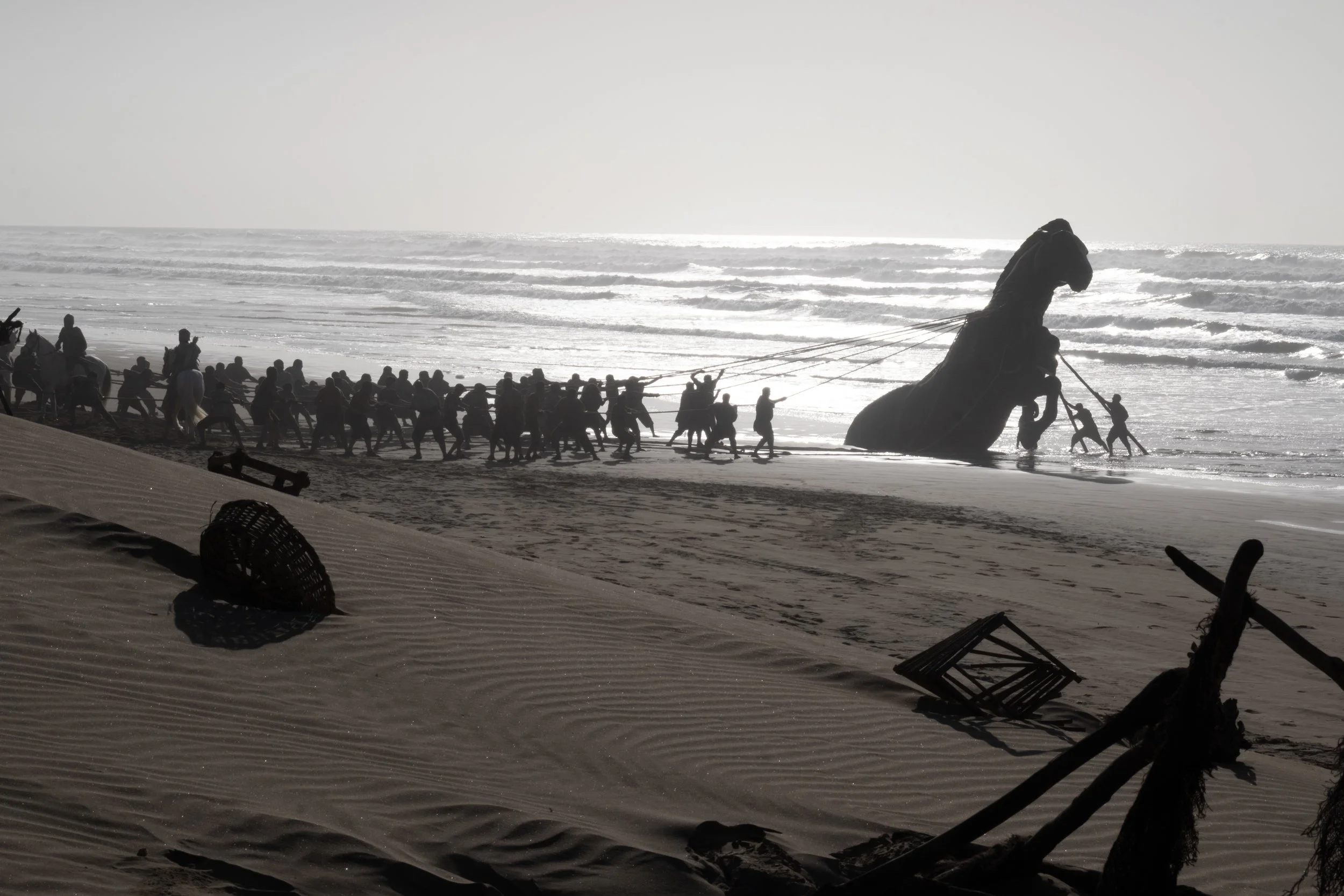
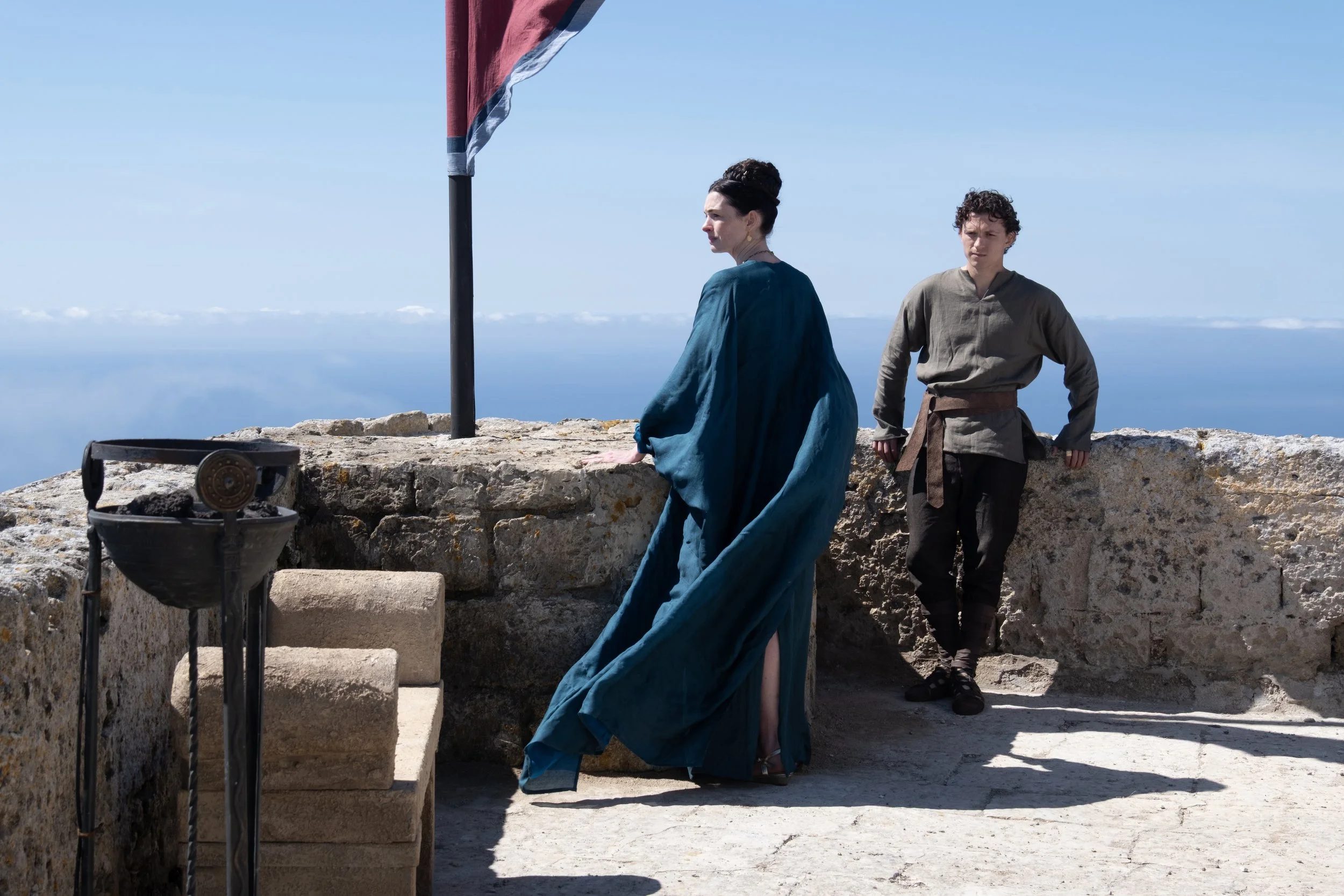
Perhaps because of this, the film feels most assured when it returns to Ithaca and focuses on human conflicts. The struggles between Telemachus, Penelope, and the increasingly aggressive suitors are not about monsters or gods, but power, memory, absence, and the consequences of choices. Ultimately, The Odyssey is not Nolan attempting to preserve Homer’s epic in its original form. It is Nolan asking what the story means now and that is why it may endure. A straightforward attempt at a “definitive” adaptation might preserve the original story but risk becoming tied to its own moment. This new version instead creates a conversation with Homer, one that future audiences can continue to revisit and reinterpret themselves.
8.5 out of 10
Starring Matt Damon, Tom Holland, Anne Hathaway, Robert Pattinson, Zendaya, Charlize Theron, Samantha Morton, John Leguizamo and Jon Bernthal. Directed by Christopher Nolan.