Moana
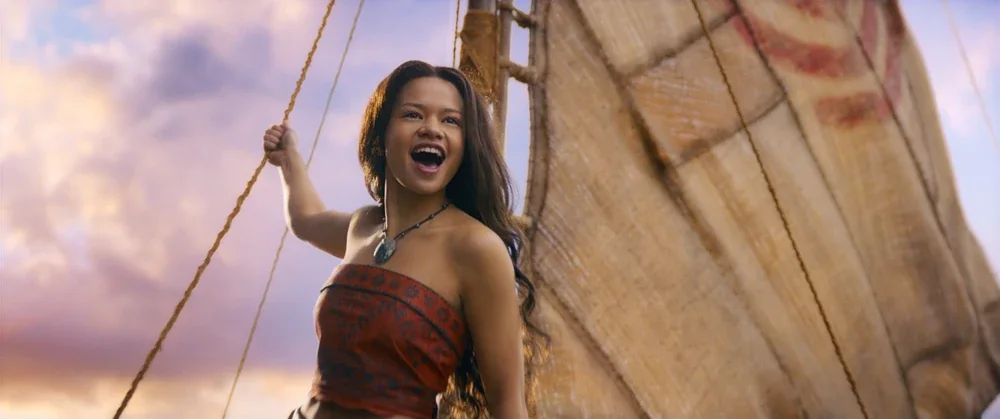
The old saying is ‘you can’t go home again.’ Not just because it has changed from remembrance, if not been lost to time entirely, but because we’re not the same individuals who left it. It exists purely as the thing we remember, a fact reality is always a poor comparison to and which we are often inevitably let down by. That doesn’t stop us from continually wanting to, however, or continually trying. Moana certainly wants to, both the film and its central character played by newcomer Catherine Laga’aia.
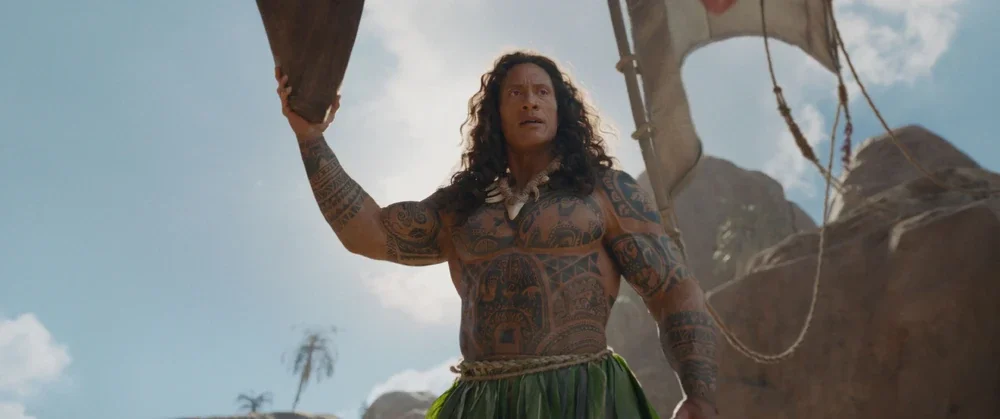
Just like the original from ten years ago, Moana dreams of a time before her tribe settled on its ocean home, when they sailed from island to island as wave born hunter-gatherers. She sees their transition to a settled agricultural society as literal death in the form of pestilence and plague and, despite her father’s (Tui) best wishes, rush out to sea to find the demigod Maui (Johnson) and calm the ancient sea demon which attacks her people whenever they set out on the water. And, perhaps in the process, she will find her own sense of identity as her people’s future leader and embrace it rather than run from it.
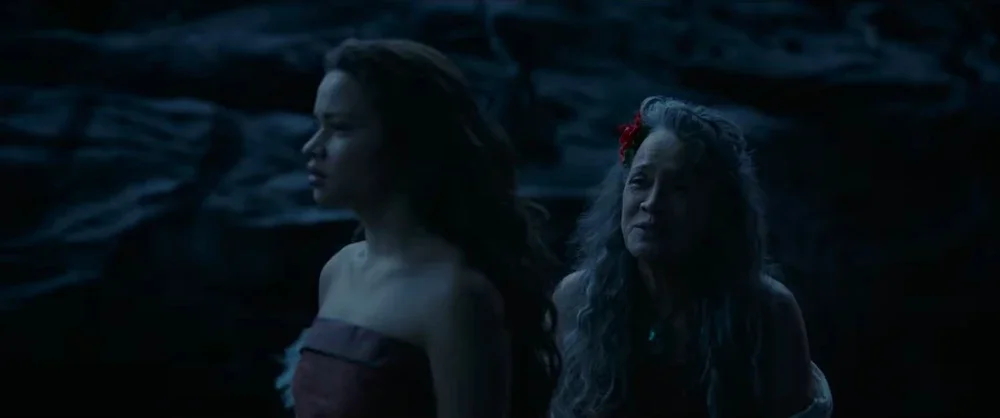
It was a straightforward and engaging story when it was first told and it essentially still is. In many ways less adaptation than recreation, it often repeats scenes and compositions almost exactly as they were in the original. More than that, it understands the strengths of the first film and lives by the motto of not fixing unbroken things. Lin-Manuel Miranda’s songs provide the same emotional energy and memorability they had before and the story still works as a construction for Laga’aia’s sincerity and confidence. She carries the film with the same sense of curiosity and determination that defined her animated counterpart. Dwayne Johnson’s return as Maui is more of a mixed blessing. His personality remains naturally suited to the character, but Maui also demonstrates what is lost when animated characters are translated into a more realistic world. Animation allowed the character to be exaggerated into a true mythological figure. His size, movement, and expressions could reflect his status as a demigod. In live action, even with visual effects, he is limited by the physicality of a real performer. As larger than life as Johnson is, what worked so well in animation seems diminished when placed within the constraints of reality.
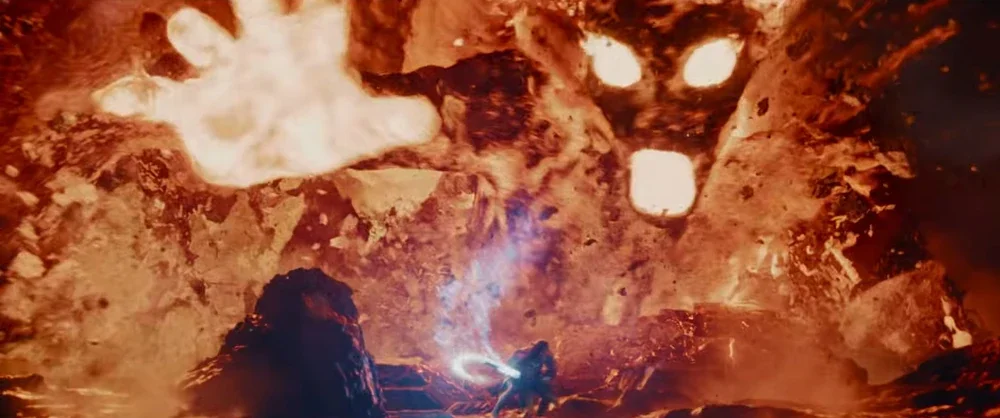
Moreso, by copying the original so exactly it takes on its strengths as much as its weaknesses. On the surface, Moana appears to be about rejecting outdated traditions and embracing the future. Moana sees her island struggling because her people have become trapped by fear and isolation. She leaves to discover a better path, but her solution is not actually a new one. She learns her ancestors were once great voyagers who traveled across the ocean and dreams of going back to that time, intimating progress coming not from invention, but from remembering what was forgotten. While stories often look back to a lost golden age, a time when humanity possessed wisdom it has since lost, human advancement has generally come through adaptation and innovation rather than restoration. The past can provide lessons, but the future is rarely created by simply returning to what once was.
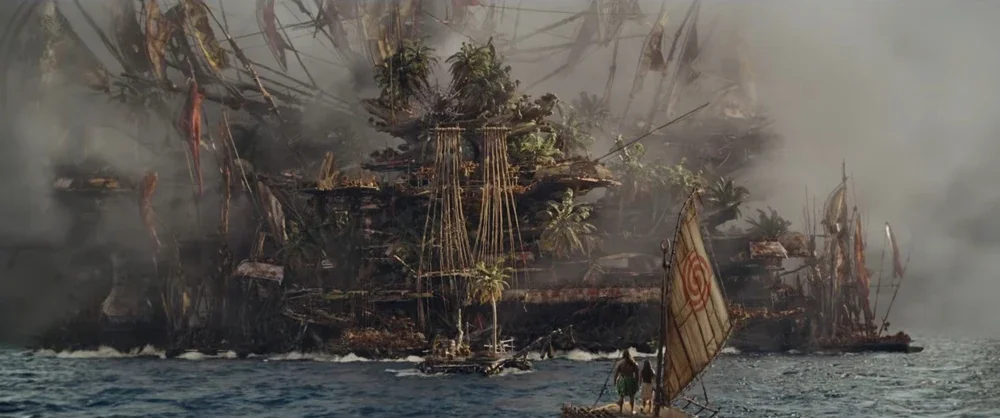
That tension creates the greatest missed opportunity of the live-action Moana. A remake could have challenged its own assumptions by exploring whether returning to ancestral ways is truly progress, whether the past can ever be recovered, or whether each generation must create something beyond what came before. Instead, the film itself becomes an example of the very thing its story questions. It does not explore new territory; it retraces a familiar journey. The audience receives nearly the same story, the same emotional beats, and many of the same images, but without the sense of discovery that made the original special. It’s a problem that has bedeviled most of the Disney live action remakes. They gain much from the originals because they preserve the elements that worked while adding in detail and precision, but in the process they lose the charm that made the animated films unique. The added realism and visual detail cannot replace the expressive freedom, stylization, and emotional immediacy of animation.
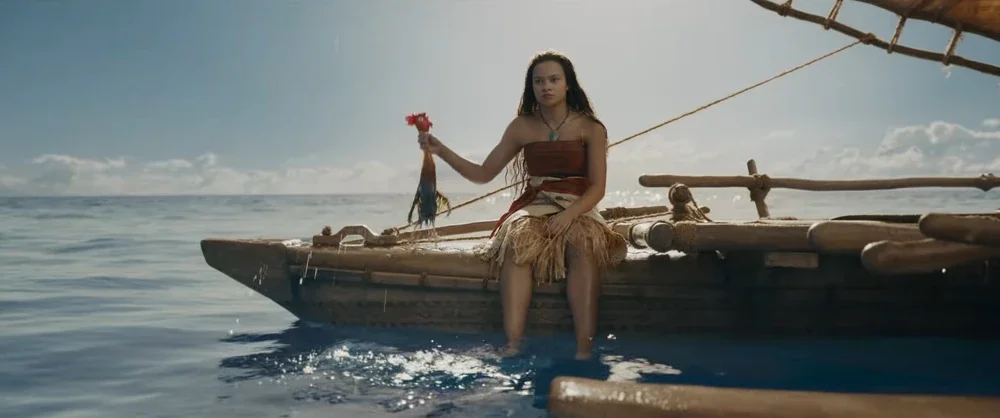
The end result, though not a travesty by any means, is often less than the sum of its parts. It never takes that final step. It finds the same island, follows the same voyage, and reaches the same conclusion. It is a technically impressive recreation of a journey audiences have already taken, but it never discovers a new horizon of its own.
6.5 out of 10
Starring Catherine Laga’aia, Dwayne Johnson, John Tui, Frankie Adams, Rena Owen, Gerald Ramsey and Awhimai Fraser. Directed by Thomas Kail.